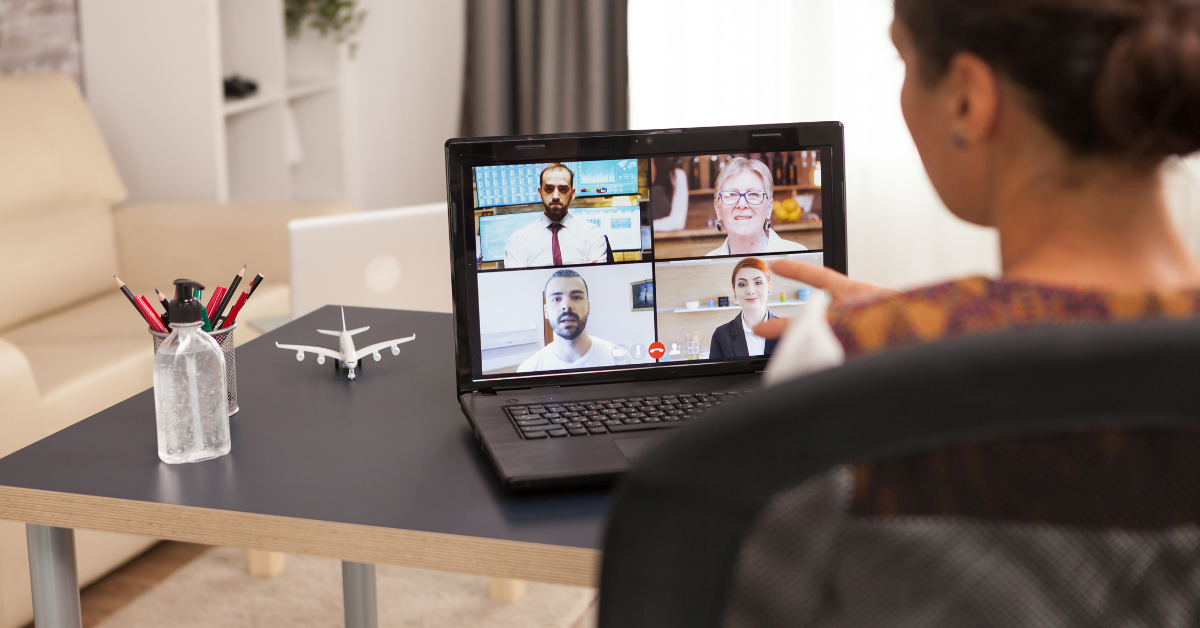
For most businesses, "where people work" used to be a simple question. Today it's a moving target. Some of your team are in the office on Monday and Thursday. Someone else is taking calls from a cabin in Colorado the last week of July. Your sales lead is closing a deal from an airport lounge. And your customers, understandably, expect every one of those conversations to feel exactly as polished as if it were happening from headquarters.
Building a hybrid workforce that actually works, especially heading into summer vacation season, is less about hardware and more about the connective tissue underneath it: internet, voice, security, and the tools your employees touch every day. Here is a practical playbook for keeping everyone productive, whether they're at their desk, their kitchen table, or their in-laws' beach house.
Start With the Foundation: Your Internet
Every hybrid work technology conversation starts at the same place: the connection coming into your building. If the office team is sharing a congested pipe, video calls to remote coworkers will pixelate, file transfers will stall, and cloud apps will lag. Business fiber internet solves the problem at the source with symmetrical upload and download speeds, which matter more than ever as half your workforce joins meetings on camera rather than consuming content passively.
Pair that with a business-grade connection at each remote employee's home, and you've eliminated 80% of the day-to-day "my internet is weird today" friction. For larger operations, SD-WAN for remote workforce setups lets you intelligently route traffic across multiple circuits, so if one location's connection hiccups, the rest of the company keeps humming.
Make Voice Location-Independent
The single biggest sign that a business has outgrown its old phone system is when an employee has to forward their desk line to their cell phone before going on vacation. A modern cloud phone system for small businesses and enterprises alike eliminates that. Your number follows you. Calls ring to your desk, laptop, and phone simultaneously, or in any order you choose.
This is where business VoIP fits into a unified communications strategy for small businesses. Instead of juggling a desk phone, a softphone, a video tool, and a chat app, the team gets a single interface for voice, video, messaging, and screen sharing. That consistency is what lets your receptionist in Little Rock, your developer in Denver, and your VP on vacation all sound like they work for the same company, because they do.
Support the Full Hybrid Work Setup
A strong hybrid work setup is more than just a laptop and a webcam. Think about the whole stack your employees need to actually do their jobs from anywhere:
-
-
A reliable home connection with enough upload bandwidth for HD video meetings.
-
A cloud-based phone so customer calls route correctly, no matter where the employee is.
-
Collaboration tools for hybrid teams (document co-editing, async video, team chat, project management) that work identically on-prem and off.
-
Remote workforce management visibility for leaders: who is available, where tickets stand, and how workloads are balanced.
The right remote work solutions for business don't just replace what the office used to provide; they make it actively easier to work together across locations. According to a 2023 Gallup analysis, hybrid is now the dominant arrangement for remote-capable US employees, with a majority of workers splitting time between home and office. That is the baseline expectation now, not the exception.
Don't Let Security Be the Vacation Souvenir
The less controlled the environment, the bigger the attack surface. Employees logging in from hotel WiFi, downloading a quick attachment on the airport lounge network, or reusing a password on a personal device all create openings. Verizon's 2025 Data Breach Investigations Report found that human element factors like stolen credentials, phishing, and misuse remained the leading drivers of breaches, and remote and hybrid endpoints are a favorite way in.
Cybersecurity for remote workers is not optional. At a minimum, every hybrid organization should deploy a VPN for remote employees, enforce multi-factor authentication across all critical systems, keep endpoint protection and patching up to date, and run regular phishing training. Managed security services can layer on 24/7 monitoring, which matters most in the summer when in-house IT staff are themselves on vacation.
The Ritter Business Difference
Most vendors sell you one piece of this puzzle. Ritter Business builds it as a single system. Our 6,900+ mile fiber network powers business fiber internet with speeds up to 100 Gbps, our Cloud PBX and SIP trunking deliver business VoIP and unified communications, and our managed services and cybersecurity offerings wrap the whole thing in 24/7 protection. That means one partner, one relationship, and one number to call when something in your hybrid workplace technology stack needs attention, whether your office is full or the team is scattered across three states.
Before the out-of-office replies start piling up this summer, take a weekend to audit your setup. Fast, reliable connectivity, flexible voice plus strong security are the three-legged stool every hybrid workforce stands on. Get those right, and the beach house becomes just another Monday.